Skip to content

News & Features

Here in the News & Features section, you can find important announcements or learn more about our work and the science we support.

Topic

Tag

Showing 1 - 9 of 221 Posts

Page:

Organizational News
24 August 2026

Retirement of the irisws-resp and sacpz web services

Both irisws-resp and irisws-sacpz are now integrated into the new FDSN station service. As a result, we are retiring these features as independent services.

Organizational News
23 August 2026

Retirement of the irisws-traveltime and distaz web services

Legacy web services irisws-traveltime and irisws-distaz that offer seismic travel-time and distance-azimuth calculations will soon be retired.

Science and Society
21 August 2026

To better understand whales, geophysicists explore old data in new ways

New research expands the limits of traditional bioacoustic monitoring by finding whale signals in unexpected places.

Organizational News
21 August 2026

New stationXML metadata submission

Network operators will have a new way to submit StationXML metadata to the EarthScope-operated NSF National Geophysical Facility. This approach uses a new Dropoff System now currently in use for miniSEED submission.

Organizational News
19 August 2026

Seismic service downtime for scheduled maintenance

A necessary scheduled maintenance window to upgrade capabilities of deployed seismic services in the NSF NGF cloud system will result in a short service disruption on Tuesday, August 25.

Organizational News
18 August 2026

The irisws-syngine, irisws-fedcatalog, and irisws-nrl web services are moving

These web services are moving from service.iris.edu to service.earthscope.org as part of our cloud transition.

Organizational News
12 August 2026

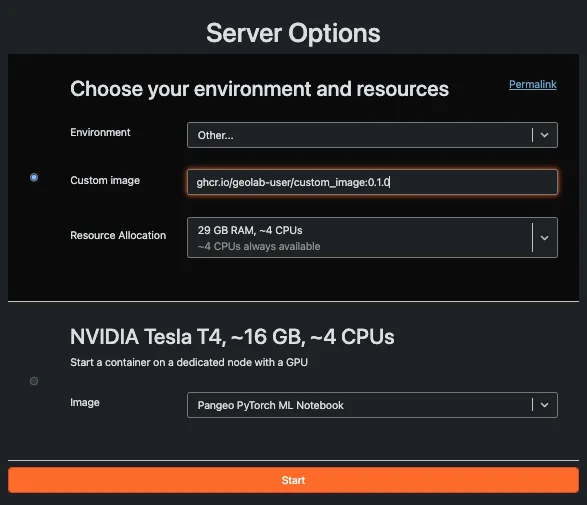
GeoLab hosts CRESCENT short course on strain accumulation from GNSS

Less than a month after we opened GeoLab to all users, the platform supported 98 participants in a three-day virtual technical short course hosted by the Cascadia Region Earthquake Science Center.

Science and Society
12 August 2026

Listening to seismic noise reveals slippery sediments beneath Antarctic glaciers

New research uses the ocean’s seismic “background noise” to map interface zones between glaciers and bedrock.

Workforce
10 August 2026

Intern Spotlight: Science Communication Team

Introducing our science communication interns! Kat Plaza is an incoming PhD student at the University of Oregon, Amanda Syamsul just graduated with her Masters from UC Santa Cruz, and Lexi Kenis is currently pursuing their PhD at the University of New Mexico.

Page: