
PH5 web services and Seattle systems retirement
The PH5 web service tools and the Seattle-based PH5 archiving systems will be decommissioned on September 1, 2026, while the PH5 datasets are being transformed and migrated to the NSF NGF SEED archive.

Here in the News & Features section, you can find important announcements or learn more about our work and the science we support.
The PH5 web service tools and the Seattle-based PH5 archiving systems will be decommissioned on September 1, 2026, while the PH5 datasets are being transformed and migrated to the NSF NGF SEED archive.
Both irisws-resp and irisws-sacpz are now integrated into the new FDSN station service. As a result, we are retiring these features as independent services.
Legacy web services irisws-traveltime and irisws-distaz that offer seismic travel-time and distance-azimuth calculations will soon be retired.
New research expands the limits of traditional bioacoustic monitoring by finding whale signals in unexpected places.
Network operators will have a new way to submit StationXML metadata to the EarthScope-operated NSF National Geophysical Facility. This approach uses a new Dropoff System now currently in use for miniSEED submission.
A necessary scheduled maintenance window to upgrade capabilities of deployed seismic services in the NSF NGF cloud system will result in a short service disruption on Tuesday, August 25.
These web services are moving from service.iris.edu to service.earthscope.org as part of our cloud transition.
Less than a month after we opened GeoLab to all users, the platform supported 98 participants in a three-day virtual technical short course hosted by the Cascadia Region Earthquake Science Center.
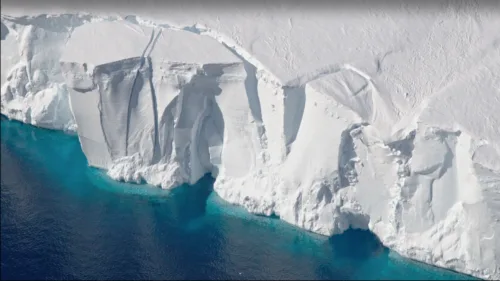
New research uses the ocean’s seismic “background noise” to map interface zones between glaciers and bedrock.