


We launched open access to GeoLab with onboarding resources including documentation, a Cloud Foundations course, and a community forum. We mentioned that these resources would be growing over time, and we have a batch of new guides ready to highlight.
The first will help you create your own custom image — the prepackaged computing environment containing all the tools and software packages needed to run your code in GeoLab. You might want a custom image when using tools not included in the base GeoLab image. A custom image can save you having to import those packages at the start of every session. You can save your image in GitHub Container Registry and easily select it when launching GeoLab.
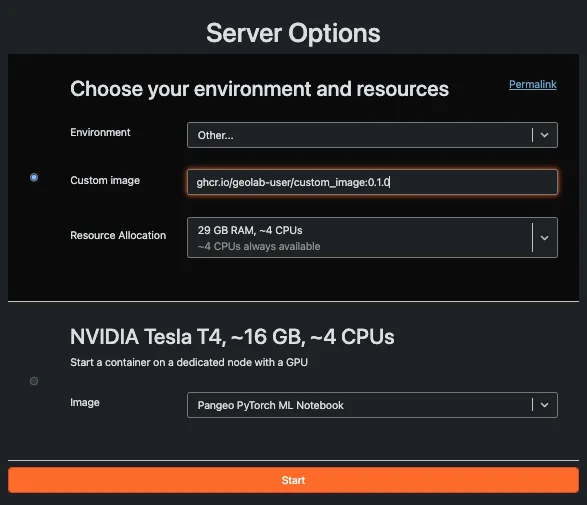
Another guide covers GeoLab Binder, which can also help you run a custom environment. This method exchanges control and versioning for quicker setup without the need to use Docker to build an image. Each time you launch GeoLab, the system can build an image using the information in your GitHub repository.
Finally, we’ve added a guide for managing the Python packages available in your GeoLab environment. This is helpful for managing your commonly used packages in one location, rather than importing them in each notebook — also making it easy to share your package list with a collaborator.
You can find these step-by-step instructions in the GeoLab documentation. Remember you can always get technical IT support from EarthScope staff through our Help Desk, or share tips in the GeoLab Community Forum.