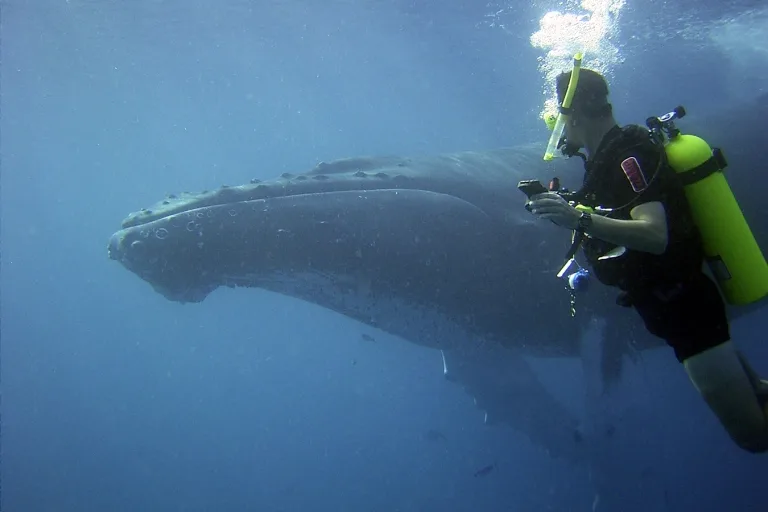
By all official accounts, Dr. Martin Möllhoff is not a whale scientist. As the Director of Seismic Networks at the Dublin Institute for Advanced Studies, he’s spent the majority of his career studying seismic waves generated by things like ocean waves, volcanoes, and flowing water. But over the course of his recent work to detect calls of endangered whales on land seismometers, he’s discovered a new passion.
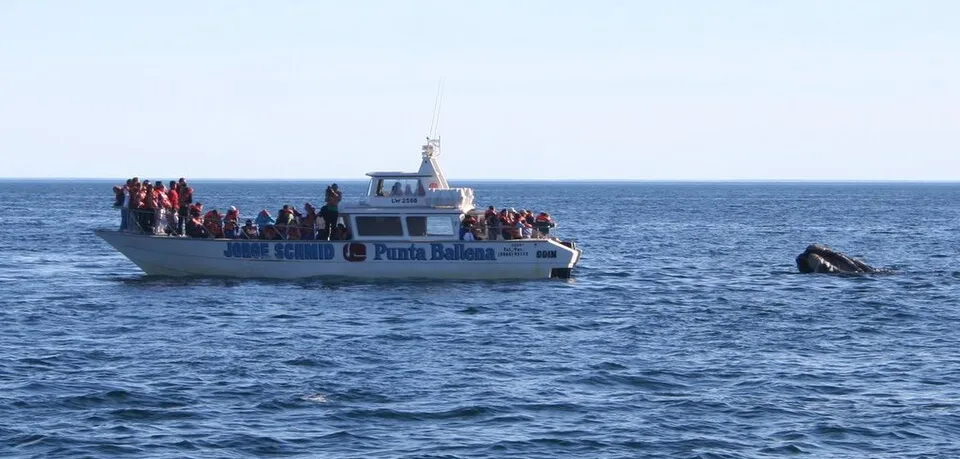
He’s not alone. Perhaps no other animal has captured public imagination like these charismatic giants of the seas. Over thirteen million people go whale watching per year, clambering aboard boats for a chance to spot one of these creatures in the wild. On the 1977 Voyager probes, NASA scientists included a humpback whale song as the only non-human greeting on the “golden record” meant to help any encountered extraterrestrials learn about humanity and our planet.
There is so much we don’t understand about these enigmatic animals. What we do know points to the deep complexity of their culture and communication: research has shown that various whale songs can go through social “trends” and have linguistic structures similar to human speech.
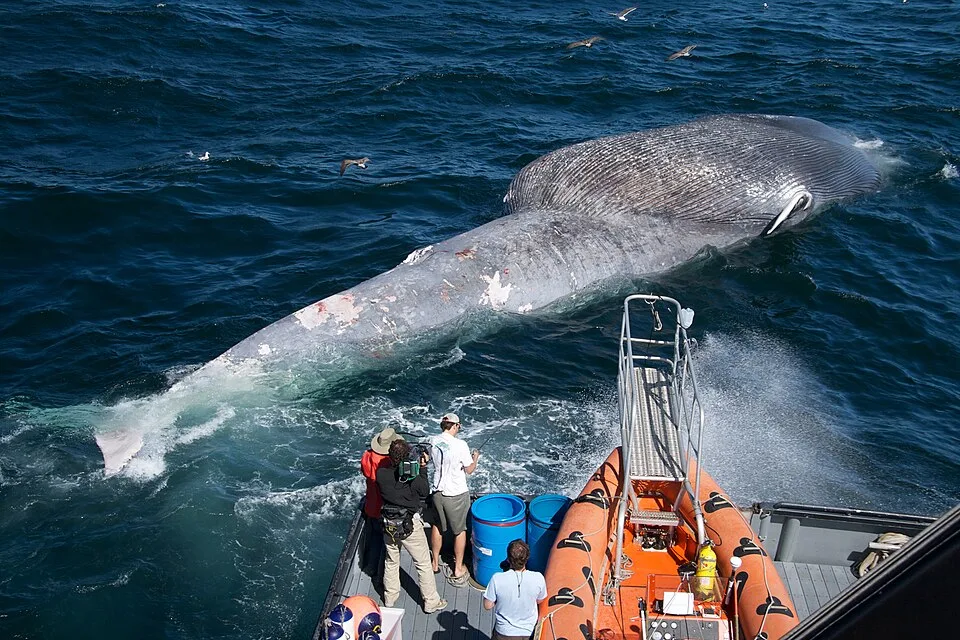
Learning about whales isn’t just a matter of public or personal interest—it’s key in their long-term survival. Though commercial whaling has been made illegal in most of the world, human activity still presents an existential threat to marine mammals. Whales are imperiled by fishing-net entanglement and the proliferation of shipping routes, which cross 92% of whale ranges worldwide and increase the risk of deadly ship strikes. Six out of the thirteen great whale species are now classified as endangered or vulnerable. By keeping tabs on whales with monitoring efforts, we can learn about their behavior and how they are impacted by growing threats.
Modern whale monitoring is anchored in bioacoustics, a scientific field concerned with how living things produce and receive sounds. By deploying instruments in the ocean that passively listen to and record the sounds around them, scientists can put an ear to the underwater soundscape and learn about whales from their calls.
“Most people, if you say you study whales, they picture somebody with binoculars out on a boat watching the surface—and it’s a pretty limited way to study animals because their life really is mostly submerged… once you’re able to take in the full range of sounds that they make and also localize those sounds, then you just get a much richer picture of their behavior,” said Dr. John Hildebrand, Distinguished Professor of oceanography at the Scripps Institute of Oceanography.
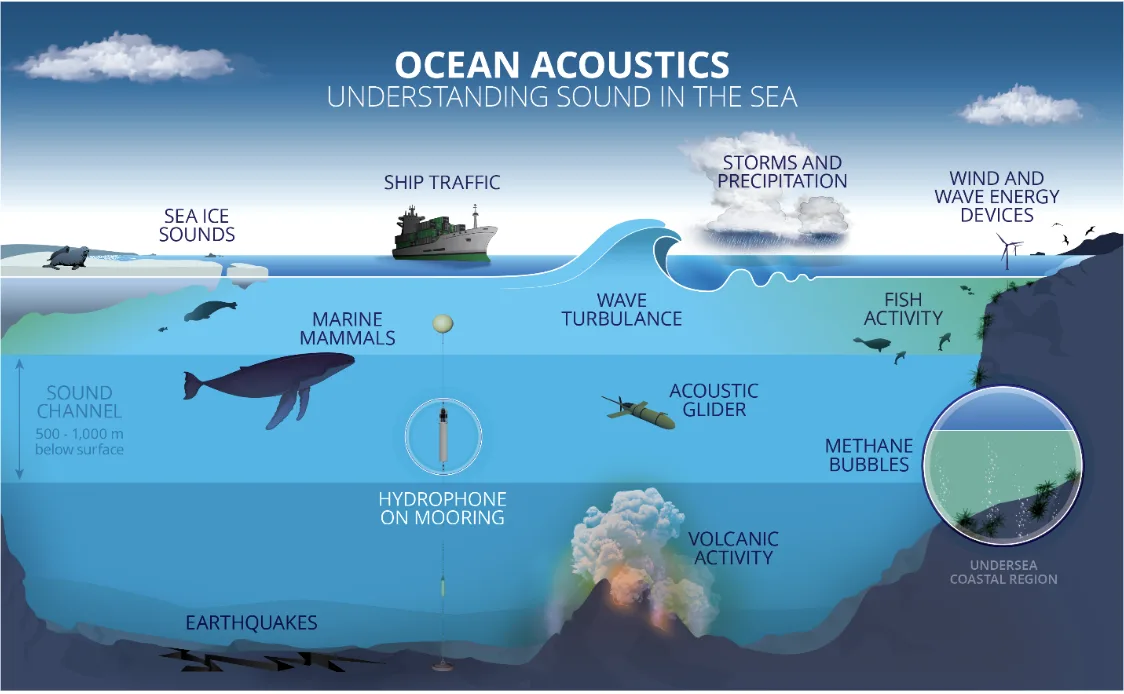
Traditional acoustic monitoring methods, however, don’t tell the full story. For decades, the backbone of ocean bioacoustics has been the hydrophone, an underwater microphone often dragged behind boats or attached to floating buoys. These instrument deployments are often expensive and logistically complicated, curbing the amount of studies that can feasibly take place.
Bioacoustics also faces a fundamental limitation: we can only monitor a whale while it’s making sounds. Whales are certainly noisy creatures, but they aren’t vocalizing all of the time—so monitoring a whale by its calls is like taking a snapshot of its behavior.
To combat these limits, researchers are coming up with new, creative ways to study these threatened creatures. What may come as a surprise is the route some of these scientists are choosing to take: harnessing the nearly-untapped potential of existing geophysical data.
Active instrument deployments and surveys on the high seas are undoubtedly a bit more cinematic than poring over heaps of already-collected data. But these old datasets can produce new breakthroughs as technologies emerge to examine them, and a wealth of information is out there for those that are willing to sit quietly and listen.
“It’s a kind of detective story,” said Möllhoff.
A whale on land?
This particular story begins with the fin whale, an endangered species whose behavior continues to baffle scientists. While some fin whale groups migrate to polar regions for feeding and then to the subtropics to mate, other populations take up year-round residence in the Mediterranean, Gulf of California, or the East China Sea; some whales form pods while others prefer to travel solo. “Fin whales are just completely puzzling,” said Möllhoff.
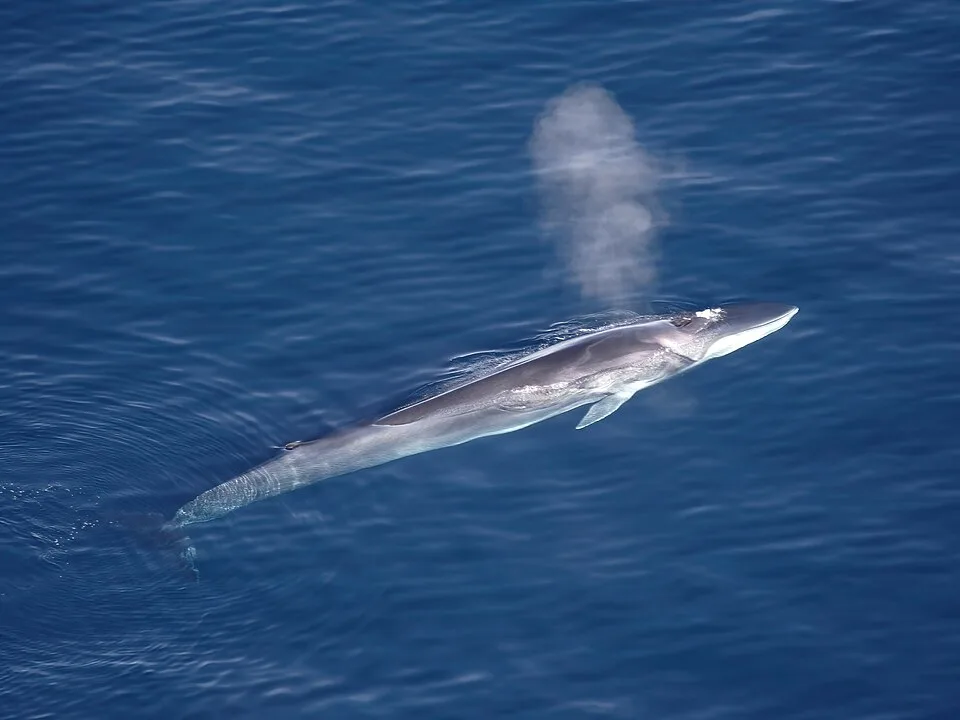
These curious creatures also produce one of the loudest animal vocalizations on the planet: a call that can rattle at 190 decibels underwater, comparable to the sound of a jet engine taking off. This thundering sound can be readily detected by hydrophones and ocean-bottom seismometers. These approaches were the topic of discussion at a research group meeting when Möllhoff’s colleague posed the question: would fin whale calls appear on coastal terrestrial seismometers?
The idea of sound appearing on a device that measures ground shaking might seem a bit strange. Although you may think of acoustic waves and seismic waves as two very different things, they’re closely related; the main distinction is that the wave is considered “acoustic” as it travels through a fluid (like air or water), and “seismic” as it travels through the Earth.
This relationship means that one wave type can turn into another as it hits the boundary between land and water. So if a whale was loud enough or close enough to shore for its call to travel all the way to land, the sound waves could “couple” to the ground and continue traveling as seismic waves.
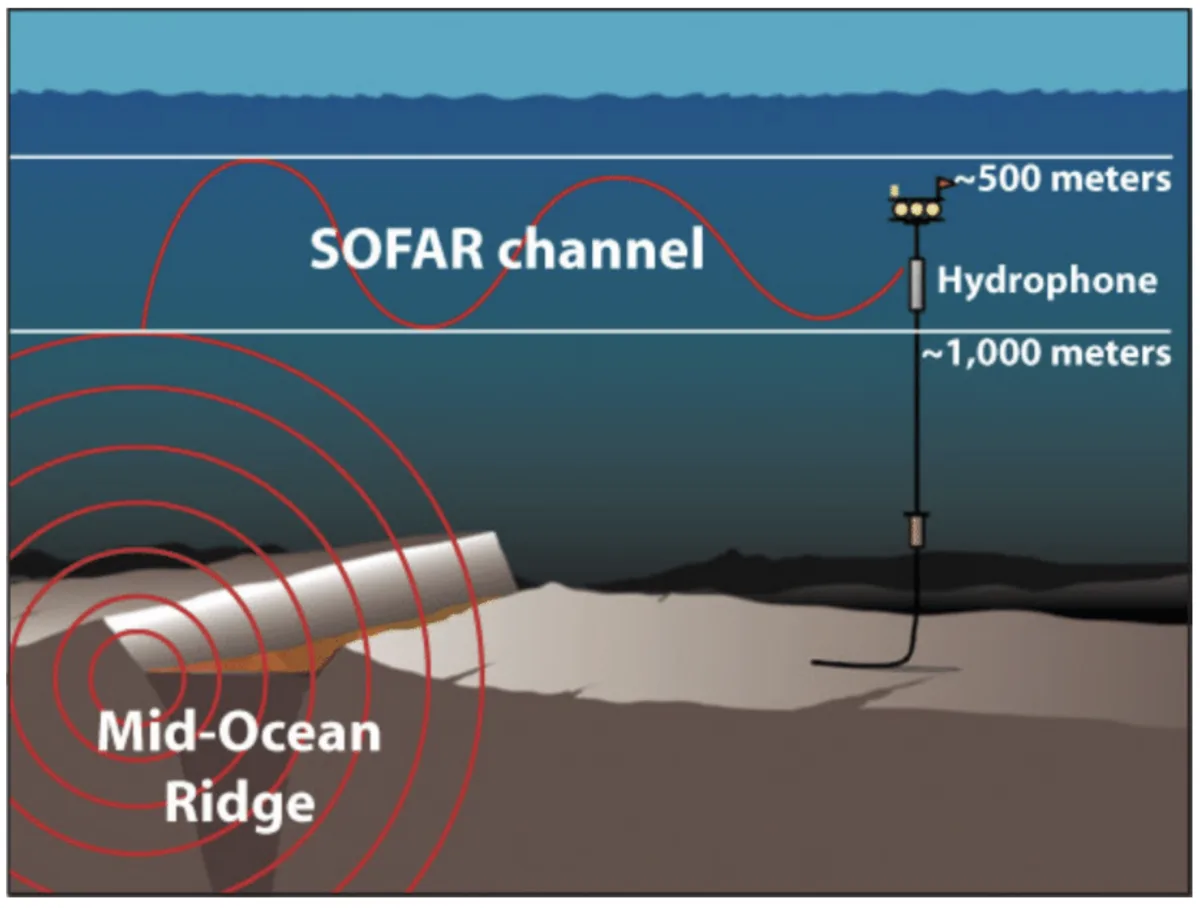
Putting it into everyday terms: “If someone is outside a swimming pool and stamping their foot on the ground next to the water… if it’s strong enough, you will hear it in the water,” explained Möllhoff.
The impressive volume of fin whale calls made this species an ideal target to test this idea. The concept wasn’t completely unfounded: fin and blue whale calls had been detected on terrestrial seismometers in one previous instance in a shipping corridor in Canada. Möllhoff’s work zoomed out and took a more global approach, examining existing coastal seismic data from Ireland, Iceland, Monaco, Mexico, and the Antarctic Peninsula.
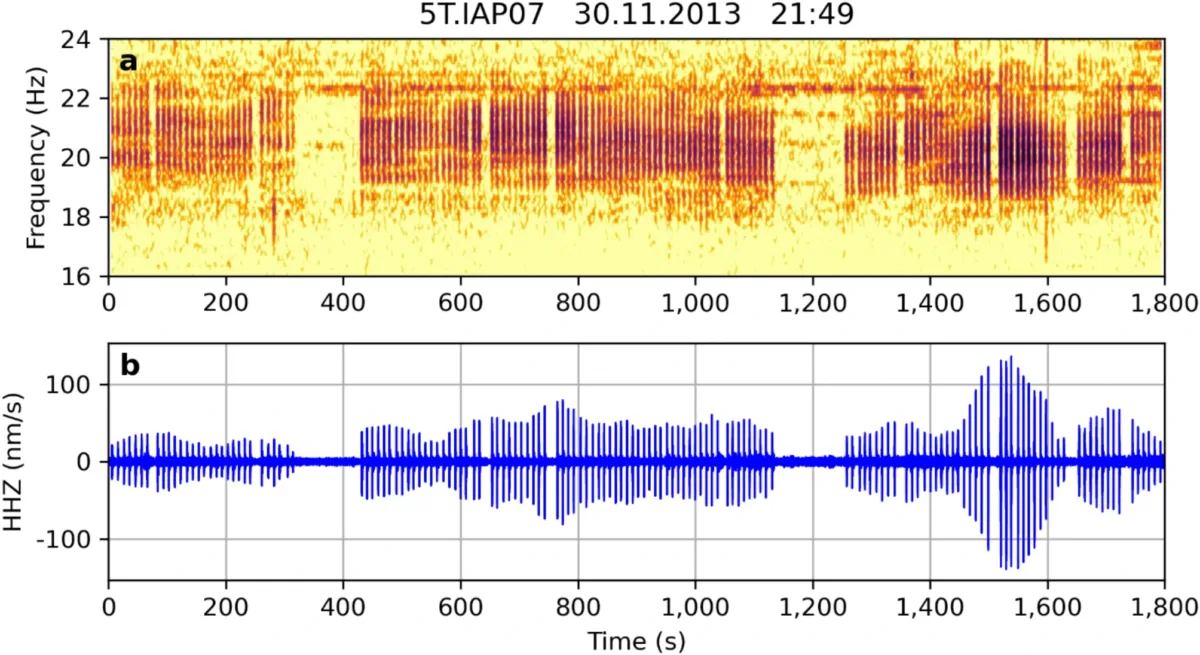
Though researchers are increasingly recognizing the complexity of fin whale calls, they’re still fairly regular, often consisting of individual pulses at a frequency of around 20 hertz. This frequency is higher than the frequencies scientists typically examine when looking for earthquakes—so even if the instruments were picking up whale calls, they were potentially screened out during analysis.
Expanding the analytical range, Möllhoff peered into seismic data (including data accessed via the NSF NGF archive) around the 20-hertz level. Clear “calling cards” of fin whale vocalizations began to emerge from the seismic chatter. Across various environments worldwide, whale noise was picked up by seismometers up to 5.5 kilometers inland.
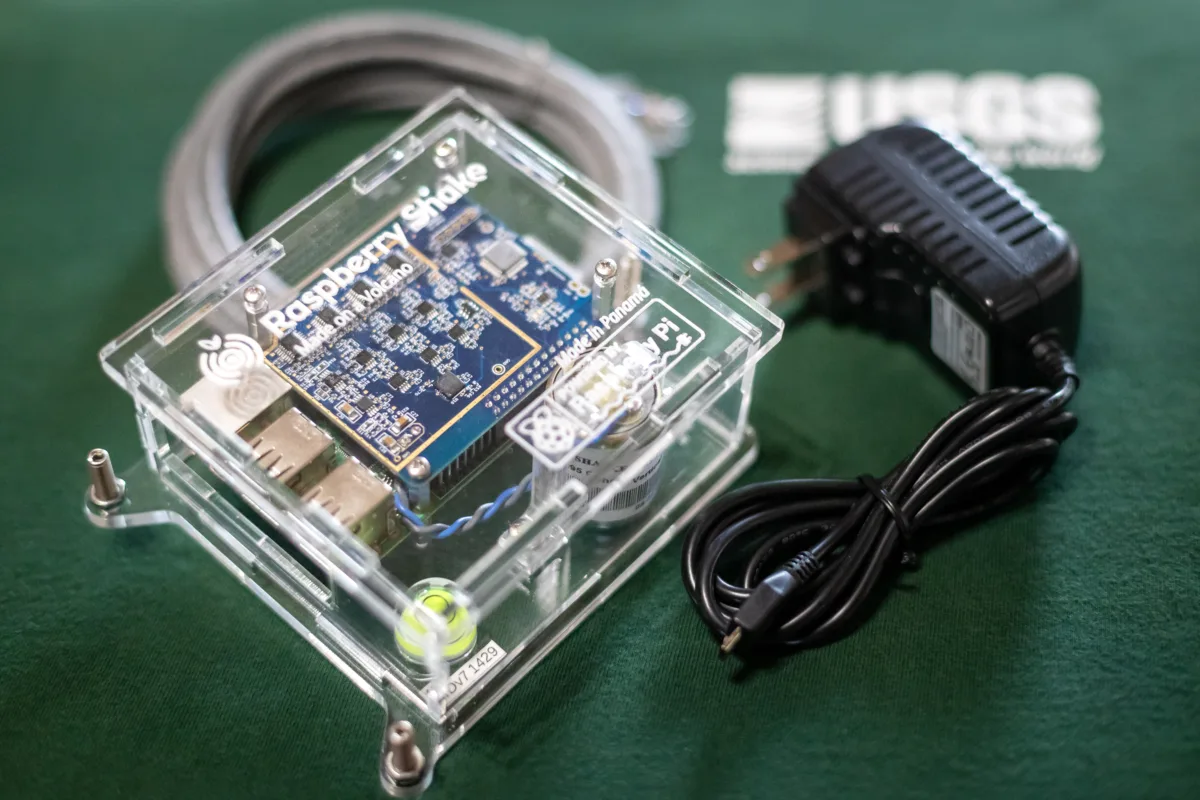
Fin whale calls could even be detected on Raspberry Shake seismometers, instruments that educators and curious hobbyists can purchase to detect and visualize seismic activity in their own backyards. To Möllhoff, this revelation is one of the most exciting parts of the project. No longer is whale monitoring restricted to professional scientists on expensive research cruises; instead, citizens of coastal communities can see for themselves how whalesong is permeating the very ground they stand upon. Möllhoff hopes that this capability will help people foster a deeper connection with oceans and marine life.
For now, the only “whales on land” are the few whose calls are loud and low-frequency enough to be detected by terrestrial seismometers: fin whales, blue whales, and—a potentially surprising addition—Bryde’s whales (pronounced “brutus”), whose calls were recently picked up on an island seismometer by a Chinese research team.
Future work can also explore exactly how and where the “coupling” of acoustic waves to the ground takes place. How do the characteristics and topography of the coastal seafloor impact this acoustic-seismic transition?
“I’m really impressed that they could do this—now the next step is let’s see if we can model it a little better,” said Hildebrand, who was not affiliated with the study.
The ability to detect whalesong on worldwide coasts opens up new pathways for inexpensive, widespread monitoring of Earth’s largest whales by both professional and citizen scientists. When whales are near to our shores, they’re most at risk from human-caused hazards like ship strikes and entanglement in fishing nets. In this way, detecting whales on coastal seismometers presents a way to monitor these mammals where they’re threatened most.
The search for silent whales
But what about that fundamental drawback of acoustic monitoring—that we can only track a whale while it’s making sounds? To fill this gap, we need a way to detect some other, silent signal created by whales.
Dr. Robin André Rørstadbotnen and Dr. Martin Landrø at the Norwegian University of Science and Technology present one solution: combing through Distributed Acoustic Sensing (DAS) data to find subtle signs of whale movement.
To understand DAS, picture a long, thin cable buried just below the ground or seafloor. This line is hooked up to an instrument called an interrogator, which shoots pulses of light down the length of the cable. As the light hits inherent defects and impurities along the cable, some of it gets scattered away. If seismic or acoustic waves reach the cable, they cause it to deform slightly, shifting the location of these defects. We can measure these shifts to learn about the incoming waves.
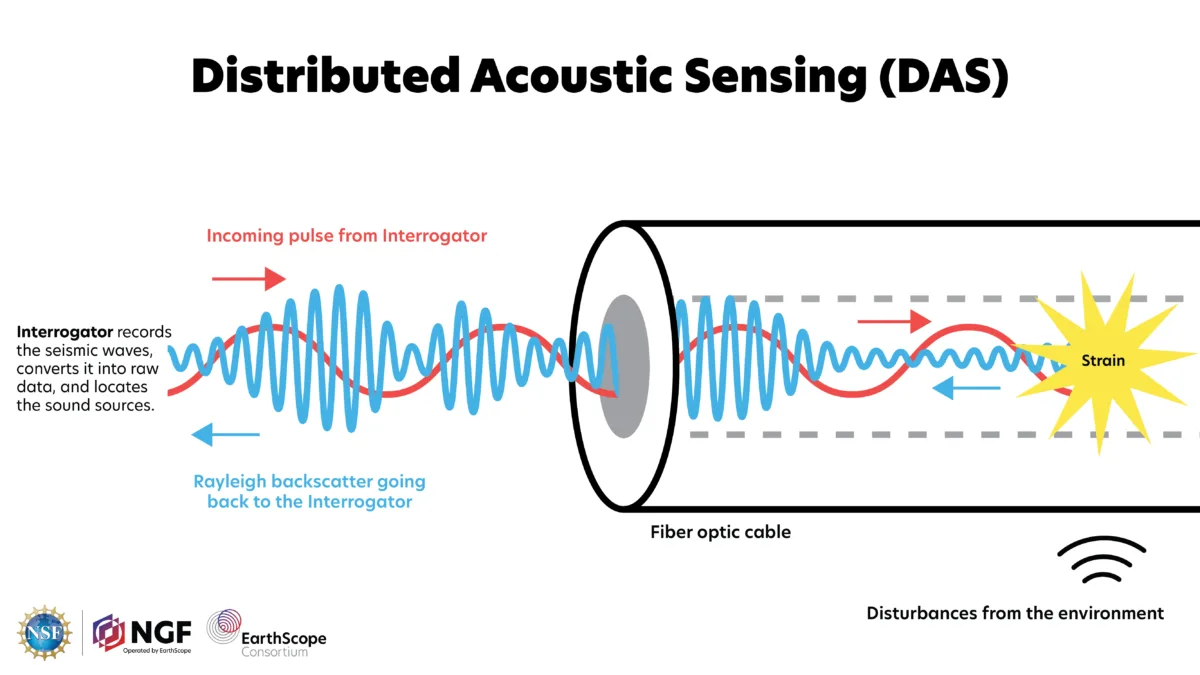
DAS has become a fixture in the world of acoustic whale monitoring, offering an inexpensive, low-risk way to continuously scan the underwater soundscape. DAS has traditionally been used to capture signals at frequencies that align with whale calls, but recent work has shown the potential of DAS to pick up frequencies outside of this range.
How does this fit into the hunt for silent giants? It turns out that a whale’s call isn’t the only way it makes waves. Imagine sweeping your arm through a swimming pool, feeling your hand push the water in front of it. Moving objects in the ocean create this same kind of “push,” generating a surge of pressure that travels through the water column. If the push is strong enough, it can reach and deform sediments on the seafloor. A DAS cable sitting beneath these sediments can pick up this deformation as a signal—albeit at a much lower frequency than whale vocalizations.
It’s widely accepted that churning ocean waves can produce these ultra-low-frequency DAS signals, and more recent work has demonstrated that moving ships can, too. But what about whales? “That was kind of the question mark,” said Rørstadbotnen.
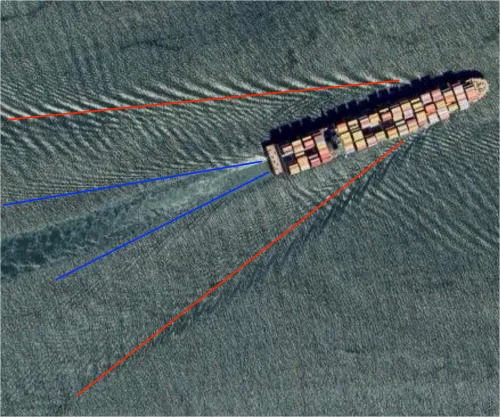
Though whales are giants to us, even the largest species are dwarfed by the likes of cruise ships and tsunami waves. In order for us to see the slight push of whale movement on DAS data, a large whale would have to come close to the cable.
To begin looking for silent whales, Rørstadbotnen first found the noisy ones. He identified signatures of blue whale calls in DAS data from Svalbard, Norway, marking these spots as times when whales were near to the cable. He then looked specifically at the low-frequency portion of the data. Evidence of “pushes” on the cable were apparent even when no ships were around, suggesting that these signals were recording the movement of blue whales as they dove nearby. At long last, silent whales were no longer also invisible.
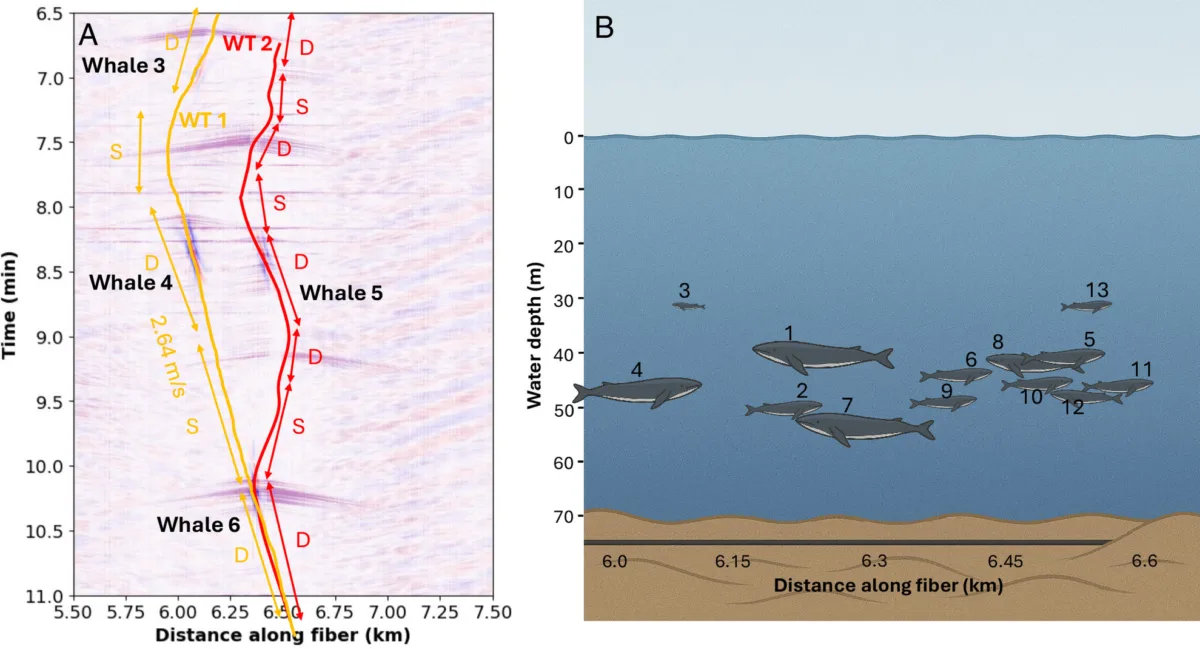
“It’s pretty revolutionary that you could take such a small hydrodynamic signal and detect it,” said Hildebrand, who was not affiliated with this study.
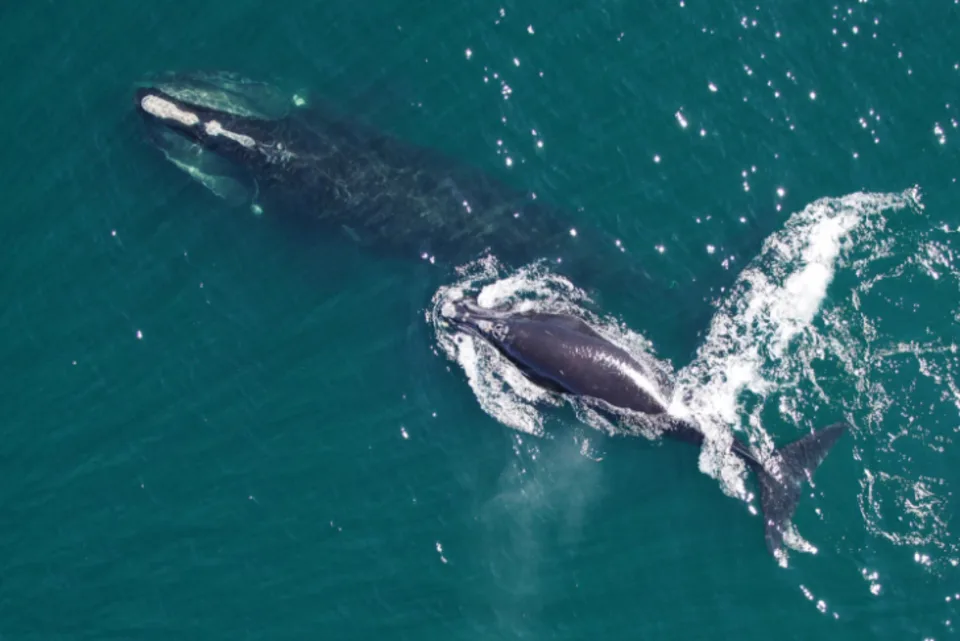
Thanks to this new signal, many moments of a whale’s life when it’s not vocalizing may now be within reach—with real practical applications. Take the example of critically endangered right whales coming in close contact to ports on the United States’ east coast: real-time detection of silent whales could serve as a more robust “early warning” system to alert ships and prevent deadly ship strikes.
“[Scientists have] been using passive acoustic monitoring for [whales], but of course the whales aren’t calling all the time… but a DAS cable might have a really great application there because you could say, ‘okay, even though it’s not calling, I can see there’s a whale swimming here,’” said Hildebrand.
This new technique is a promising tool to add to a growing toolkit, not a reason to throw out the kit entirely. Waves made by whale movement are so subtle that DAS’s “whale vision” is currently near-sighted: in this study, the animals could only be detected when they were within 40 meters of the DAS cable. “It will be a complement to acoustic data,” said Rørstadbotnen. “It’s not like it will replace anything.”
Especially in this new tool’s infancy, acoustic data will actually be essential for understanding which whale is creating the signal: we can see that a whale is pushing on the DAS cable and even infer its size, but linking the whale with its specific call will help us identify its species.
Detecting the movement of silent whales represents a whole new way to monitor these marine mammals. And like the fin whales’ calls in terrestrial seismic data, these signals were always there—we just weren’t looking in the right place.
Communing with giants
For all that traditional bioacoustic methods have done for our ability to monitor whales, they leave gaps in our understanding of these complex, threatened creatures. Scientists like Möllhoff and Rørstadbotnen are helping to fill these gaps — not by running expensive field campaigns to deploy new instruments and collect new results, but by looking at existing data in innovative ways.
But when asked what surprised him most about this project, Möllhoff didn’t respond with comments about seismic data or analysis. Instead, he began excitedly rattling off whale facts he’d learned. He’s recently purchased a book on whale communication.
“Now any time in the general news, I hear something about whales… and it’s so interesting,” said Möllhoff. “I didn’t have that before.”
Perhaps this enthusiasm shouldn’t come as a surprise. It’s derived from the same reason we squeeze onto whale-watching boats and send whale calls to space as a symbol of our world: something about these gentle giants is inherently, endlessly fascinating. For geophysicists accustomed to studying the tremors of the earth or the rumbling of a waterfall, finding signals from another living thing is a new kind of thrill.
“To see something that comes from another animal… it just feels different when you look at the data,” said Möllhoff. “This song means something.”